Proof of Concept
NEOM — Worker Welfare PoC
A multi-role worker welfare and grievance-management product concept.
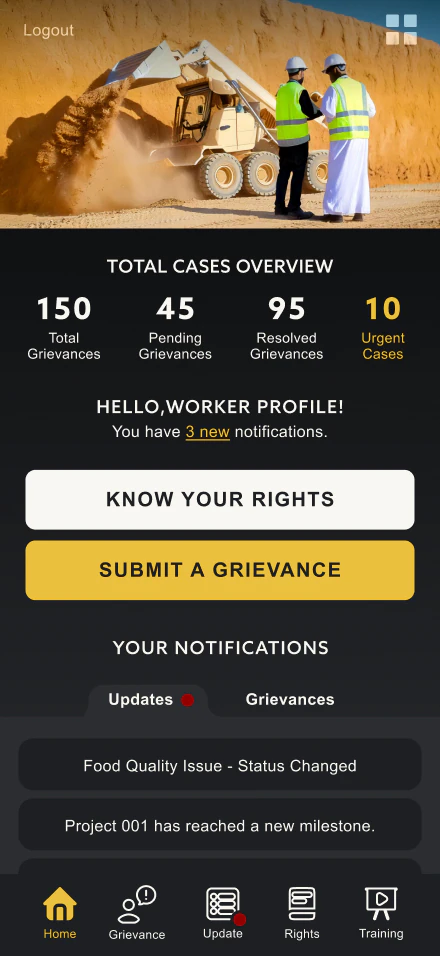
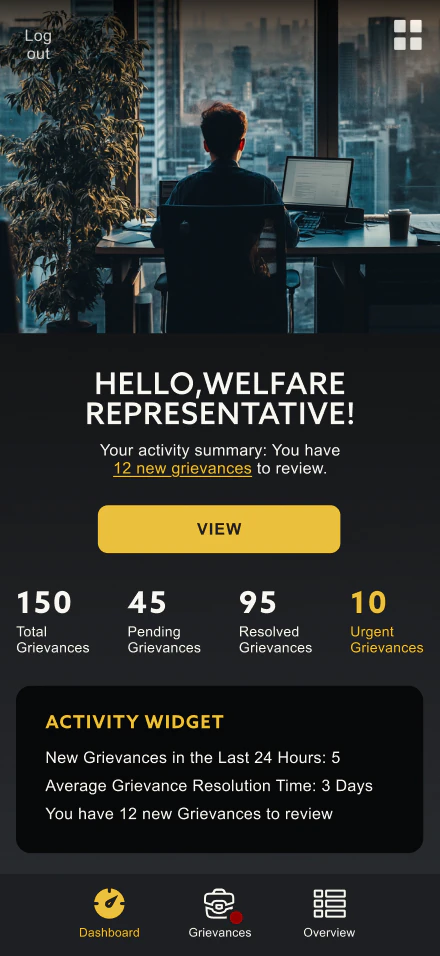
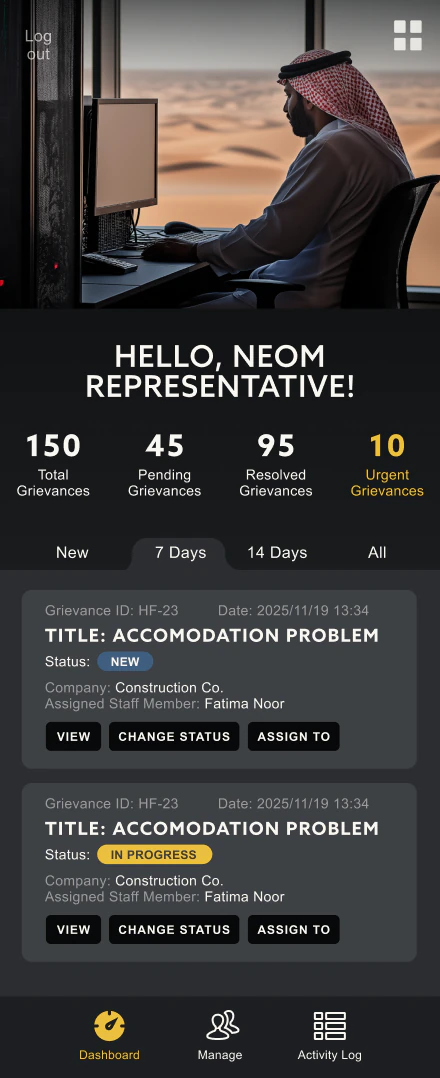
A PoC for different welfare roles
NEOM Worker Welfare explored a digital experience for raising and managing worker-welfare grievances. The supplied screens represent a mobile worker experience alongside mobile views for representatives and administrative case management.
The role split shapes the product more than screen size alone. A worker needs clear access to reporting and the state of an individual grievance. Representatives need to review records and their activity; administrative views bring monitoring and oversight forward. The diagram summarizes those represented areas for portfolio review.
Worker · mobile
- Access and identity-verification experience
- Worker overview
- Submit and review grievances
Representative · mobile
- Activity overview
- Case list and detail
- Assignment and status context
Administrative · mobile
- Monitoring and oversight
- Operational case views
- Shared interface patterns
Worker access and identity context
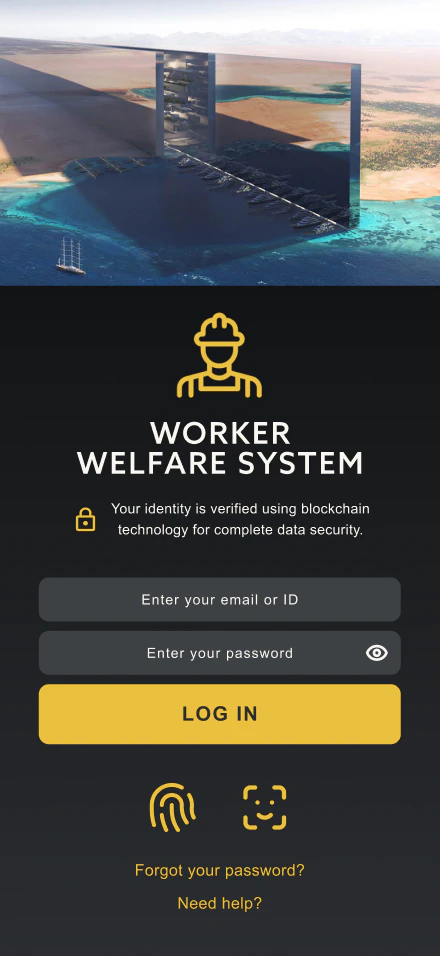
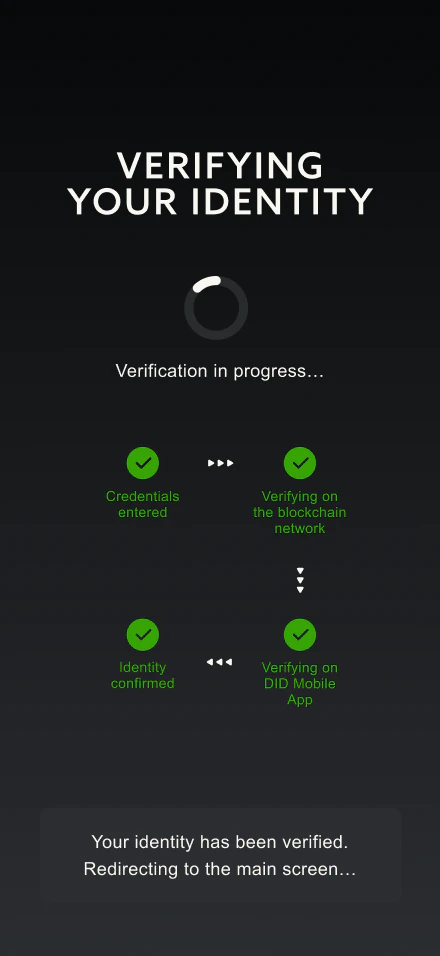
The worker-facing sequence starts with access, then represents an identity-verification step before reaching the overview. The screens keep that progression understandable without making the identity mechanism the product proposition.
The PoC explored an identity-verification experience using DID / blockchain concepts. My work covered the interaction layer around the proposed mechanism; the underlying blockchain, encryption, cryptography and security architecture were outside my scope.
Reporting access and case review
The worker overview places grievance reporting, rights information and notifications in one mobile context. It establishes a clear starting point for raising an issue while keeping updates visible alongside the worker’s other welfare information.
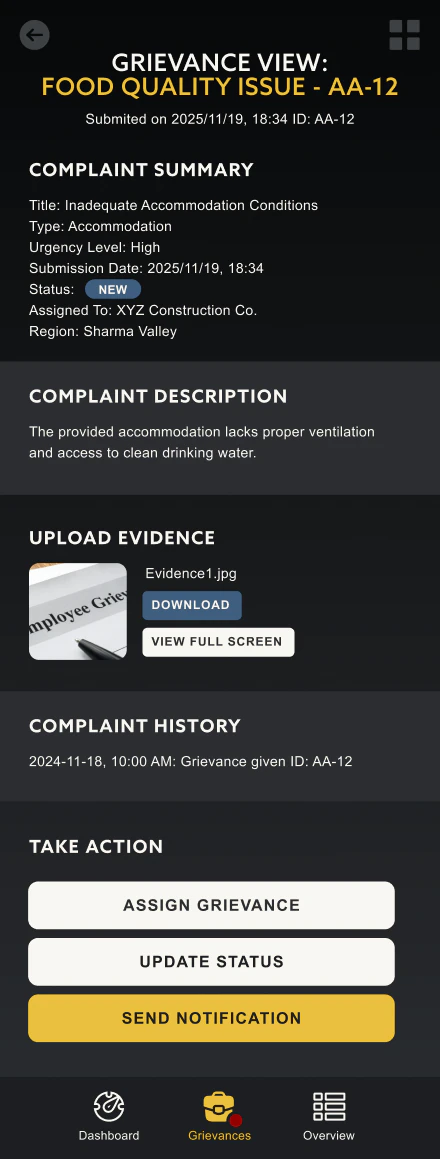
The representative case views show how case identity, status, evidence and activity are brought into a review context. Names, organizations, identifiers and case details are fictional demonstration data; the screens do not establish live operations, deployment or measured outcomes.
Representative and administrative case work
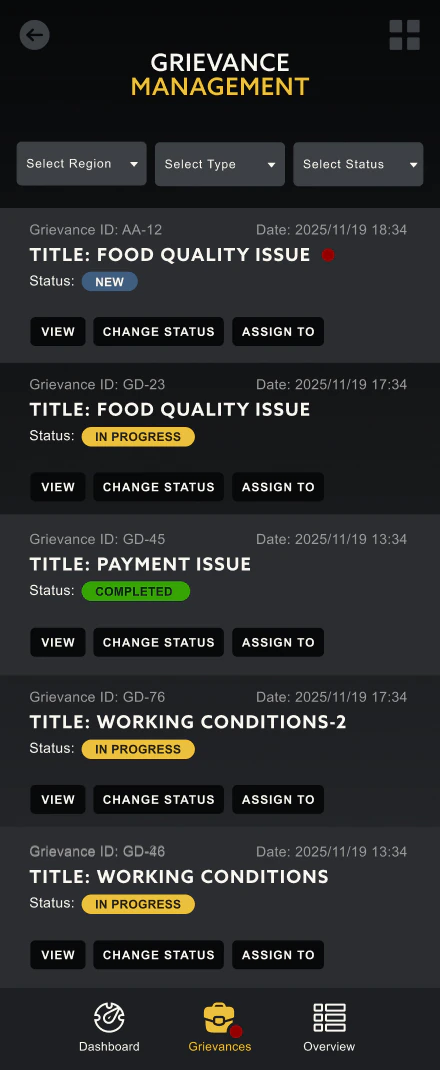
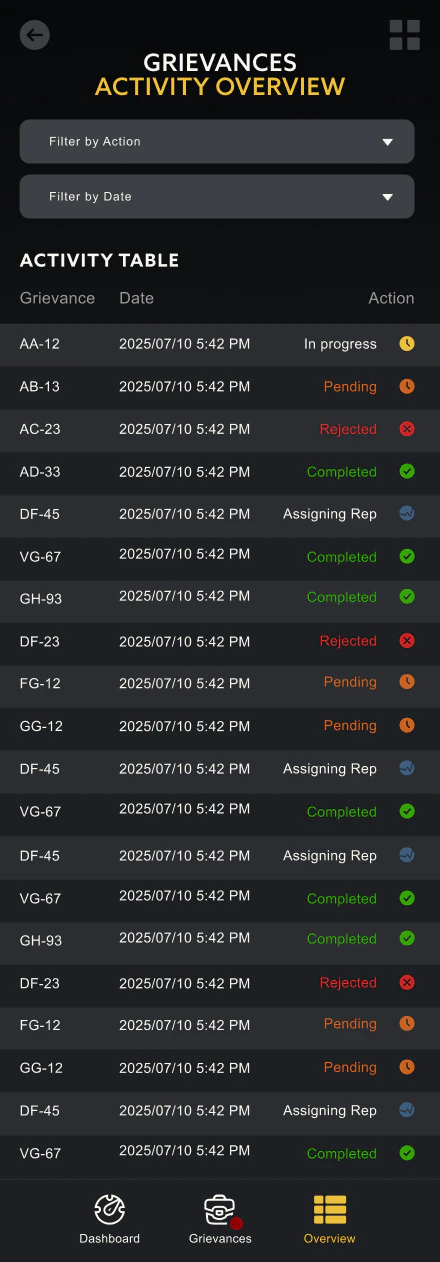
Representative and administrative views provide a separate context for reviewing cases. The case list puts filtering and record status close to available actions. A detail view groups case identity, evidence and history, while activity and monitoring views support a broader oversight perspective.
The role-specific screens share repeated interface patterns. Visible organizations, people, identifiers, counts and grievance content are fictional demonstration data.
Patterns organized for portfolio review
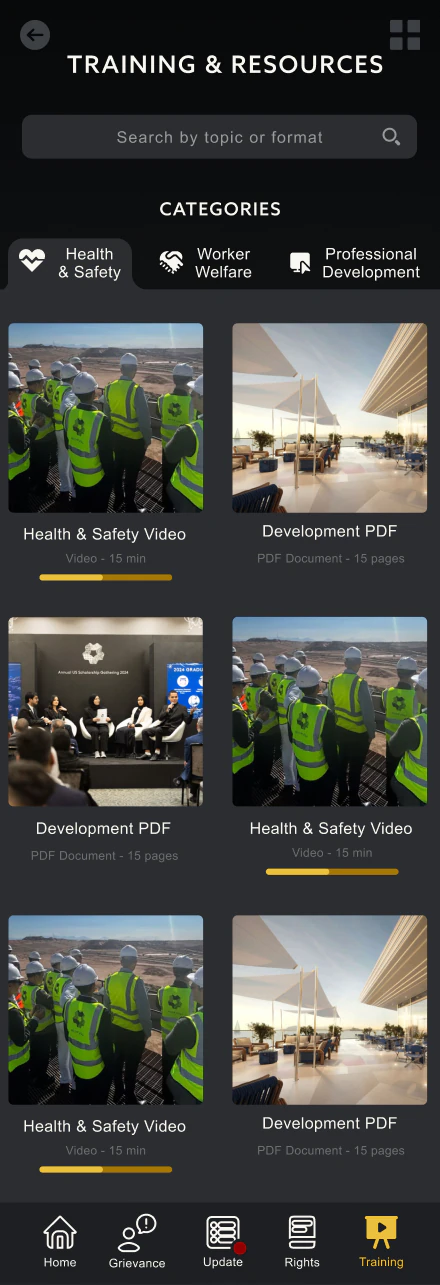
Repeated navigation, forms, status treatments, case summaries and activity patterns provide a consistent interface across the role-specific views. For this portfolio version, I organized the reviewer file around these patterns and documented the screens for easier inspection.
That systemization is retrospective. It describes the current presentation of the PoC for review, not a claim that the original engagement delivered a governed production design system or coded component library.
One product, distinct responsibilities
The project demonstrates a multi-role product model: workers can represent an issue through a mobile experience, while separate mobile views support representative case review and administrative oversight. Keeping those responsibilities distinct makes the product easier to understand than treating the work as one interface that simply changes at a breakpoint.
The work remains a Proof of Concept. The Figma prototype and screens present UX/UI direction; production deployment, operational adoption, technical security implementation and measured results are outside the evidence shown here.